EduNaf
2024
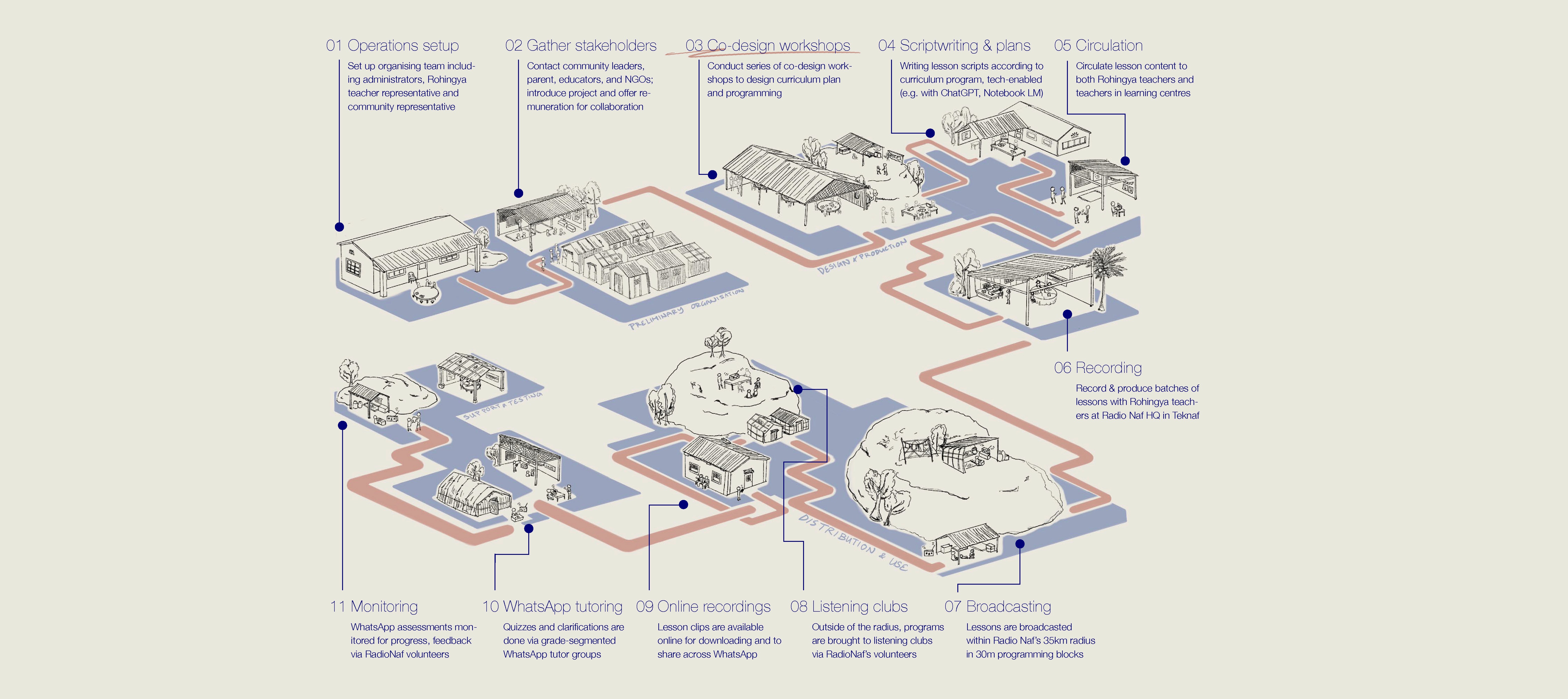
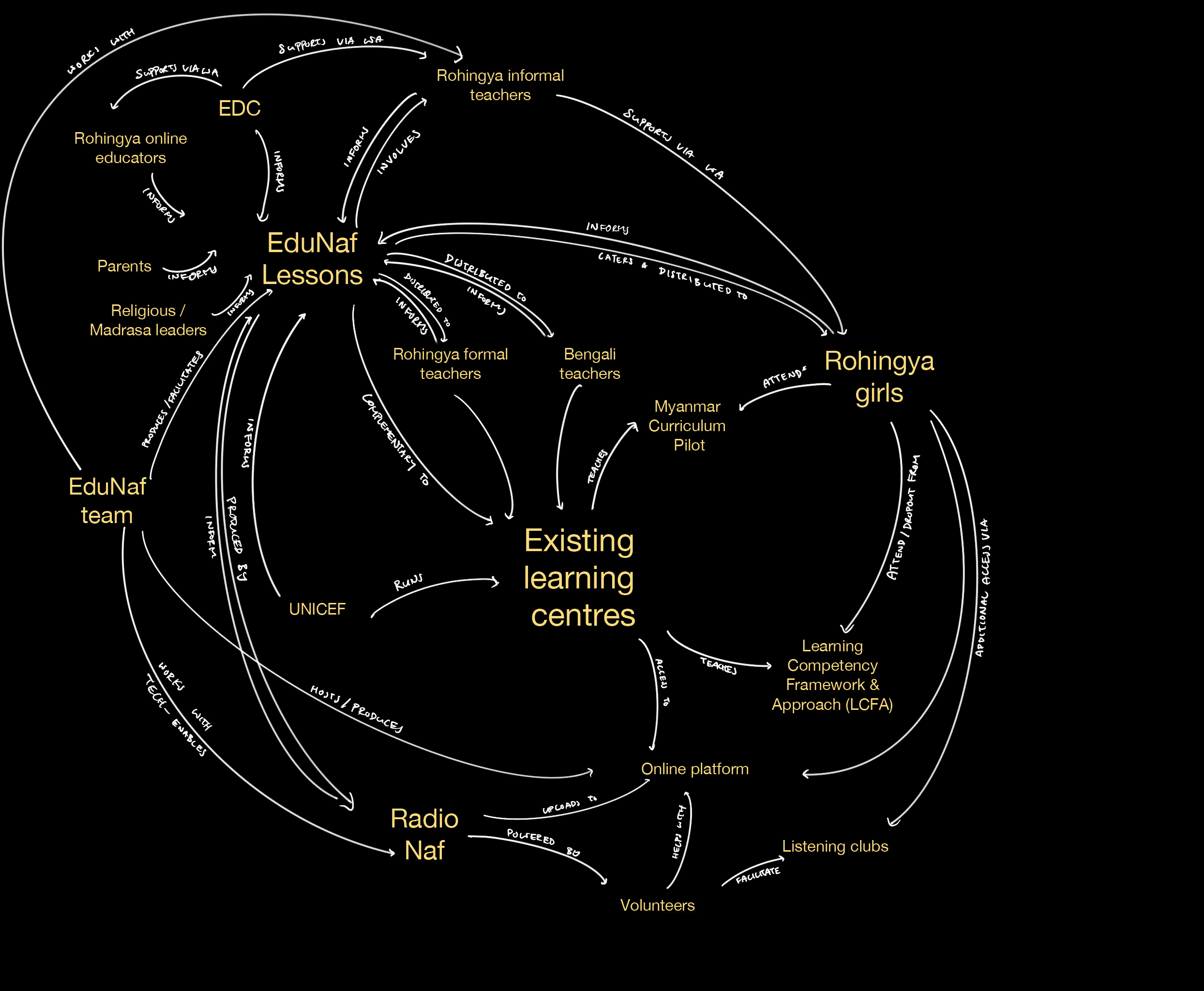
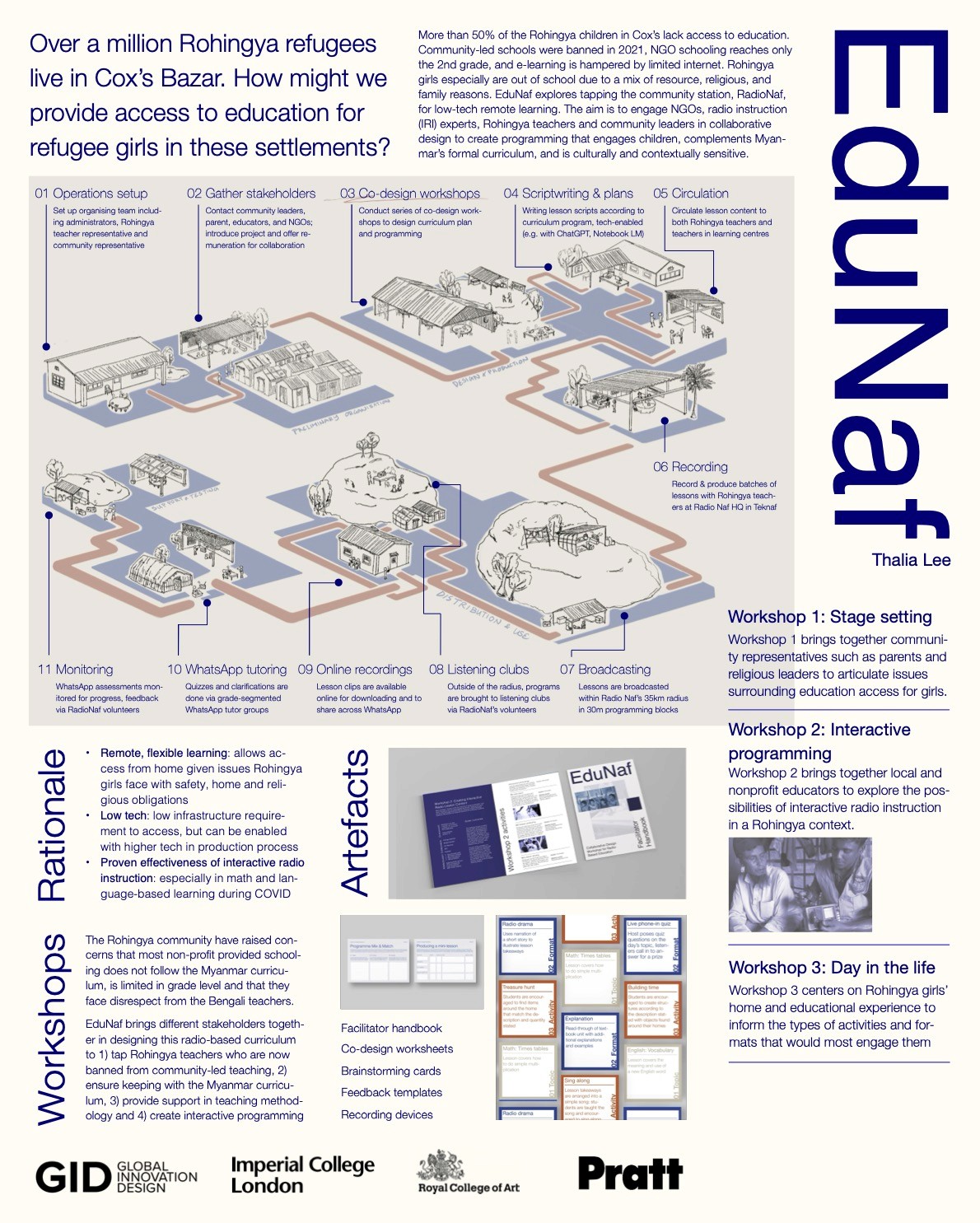
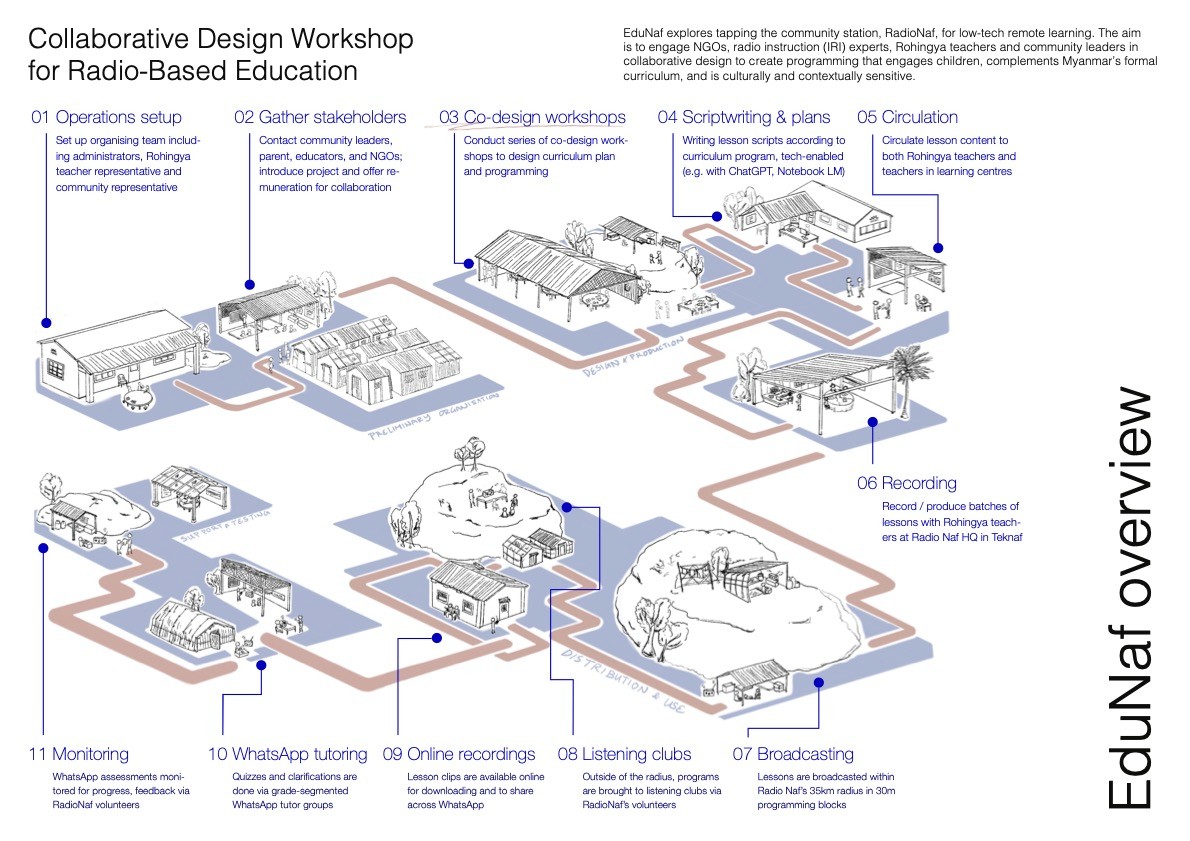
More than 50% of the Rohingya children in Cox’s lack access to education. Community-led schools were banned in 2021, NGO schooling reaches only the 2nd grade, and e-learning is hampered by limited internet. Rohingya girls especially are out of school due to a mix of resource, religious, and family reasons. EduNaf explores tapping the community station, RadioNaf, for low-tech remote learning. The aim is to engage NGOs, radio instruction (IRI) experts, Rohingya teachers and community leaders in collaborative design to create programming that engages children, complements Myanmar’s formal curriculum, and is culturally and contextually sensitive. The diagram above outlines the general flow of the initiative, while the images below provide more details, sample artefacts and stakeholders identified.
Materials
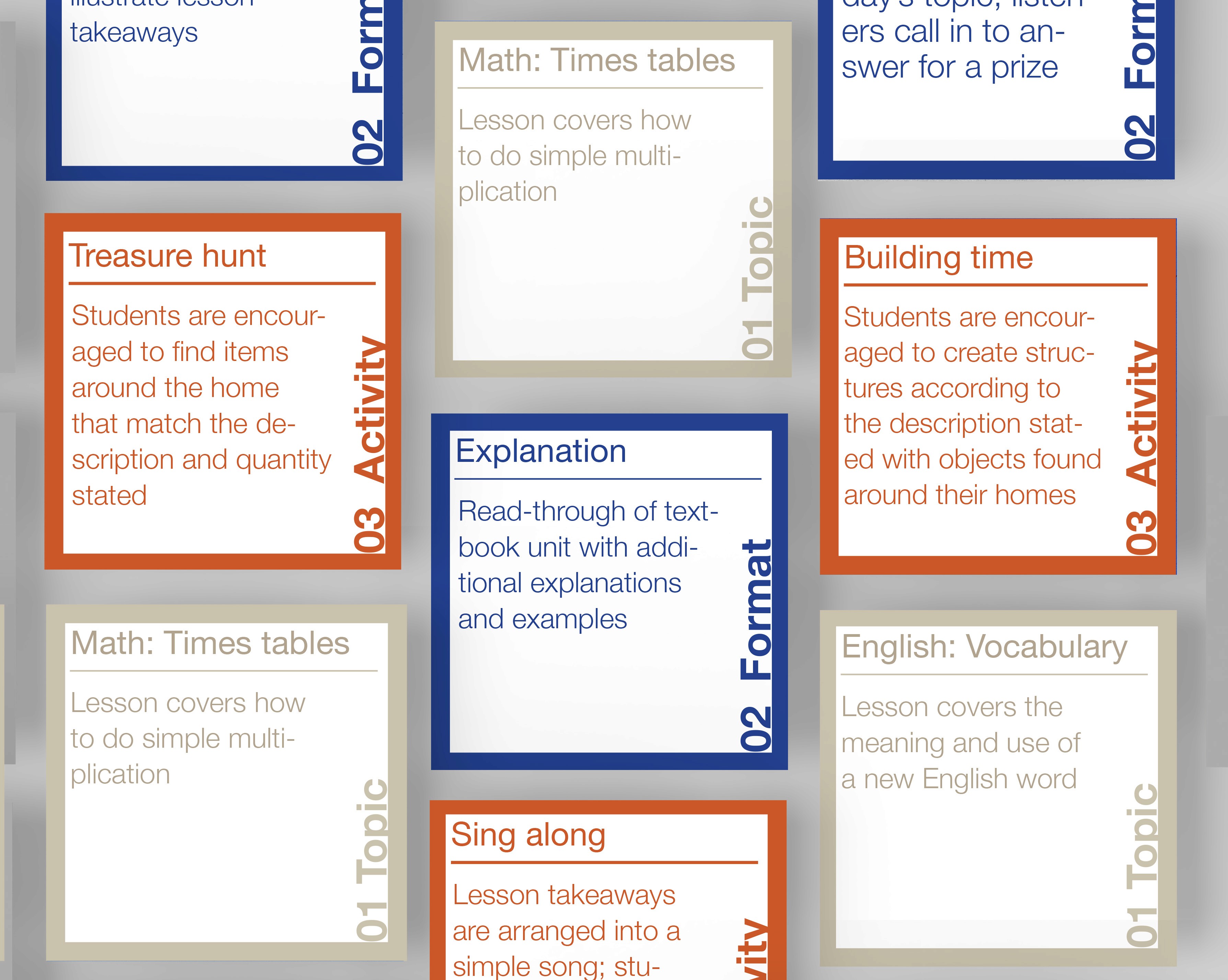
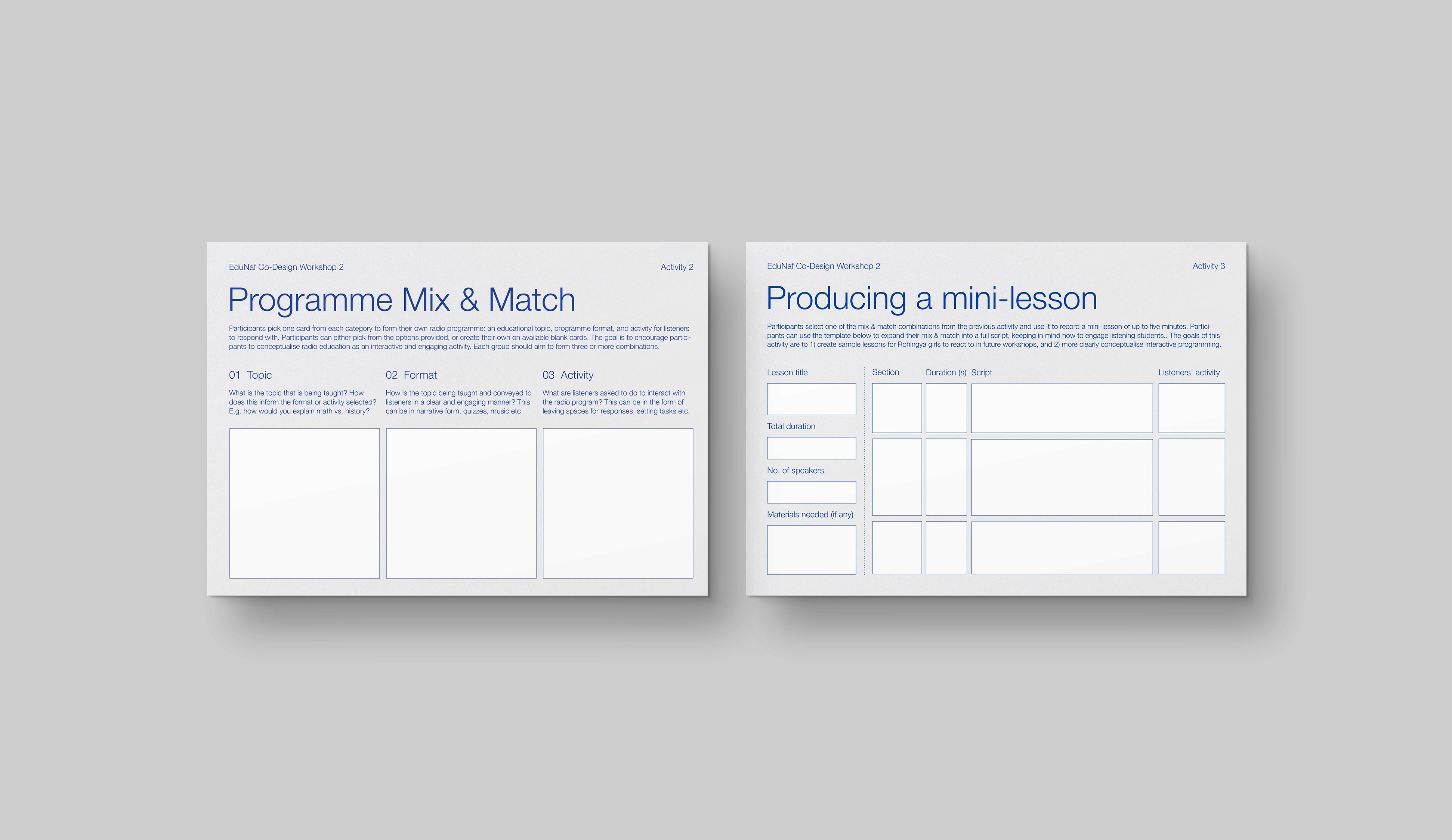
Workshop kit, handbook and artefacts
Credits
Global Innovation Design, with RCA & Imperial
Systems Design, Co-design, Aid
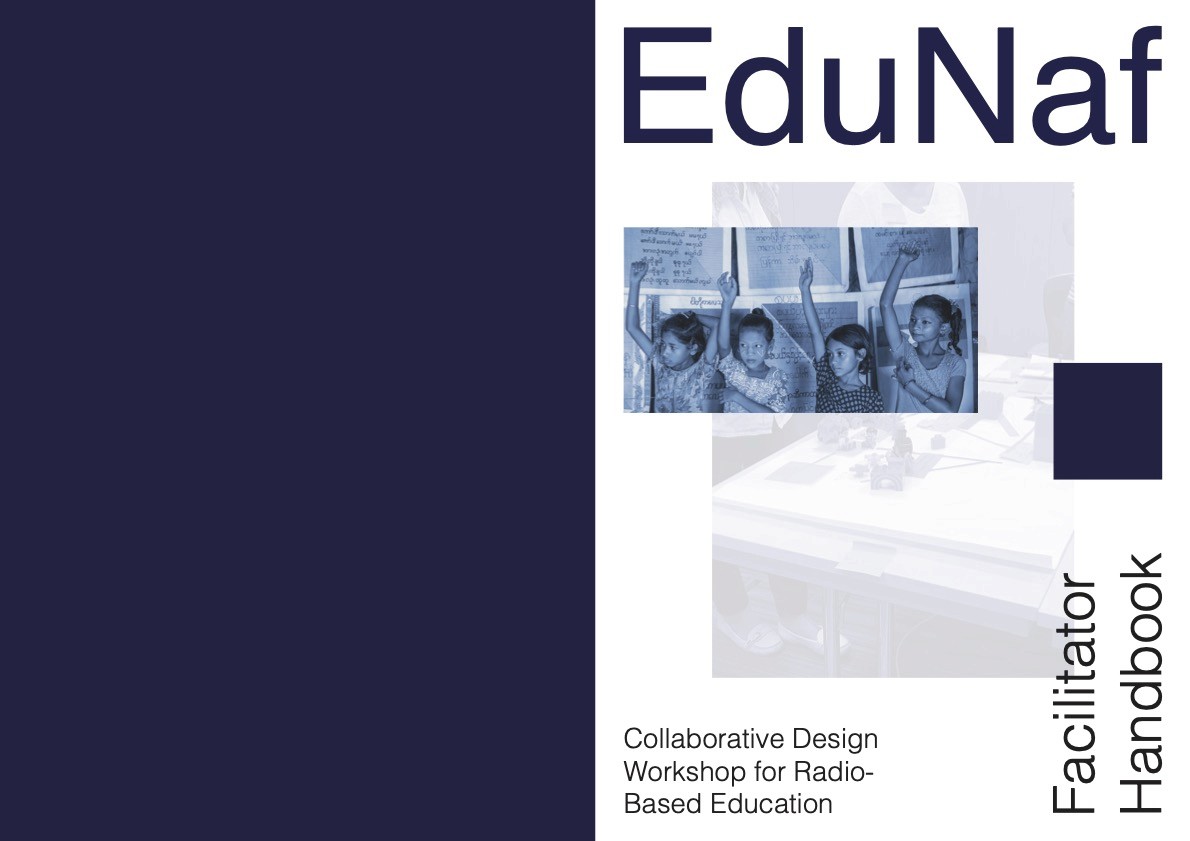
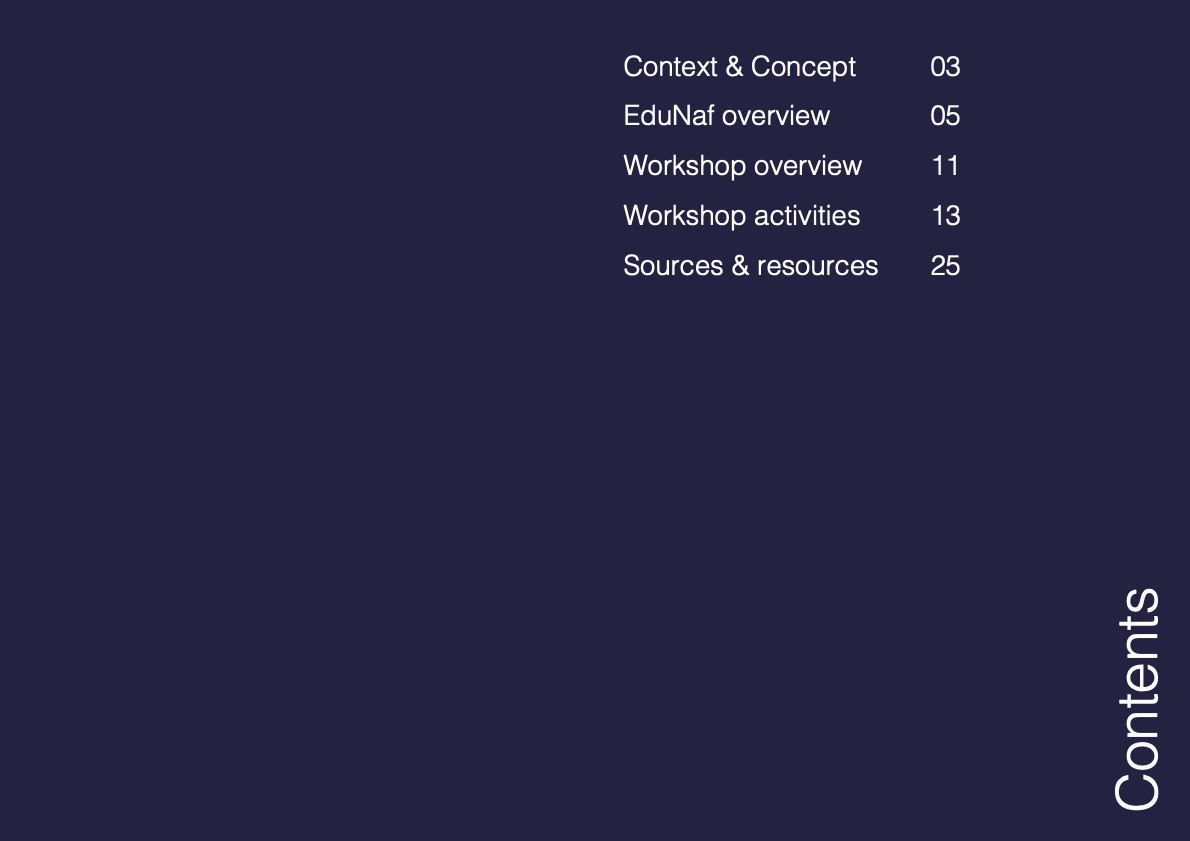
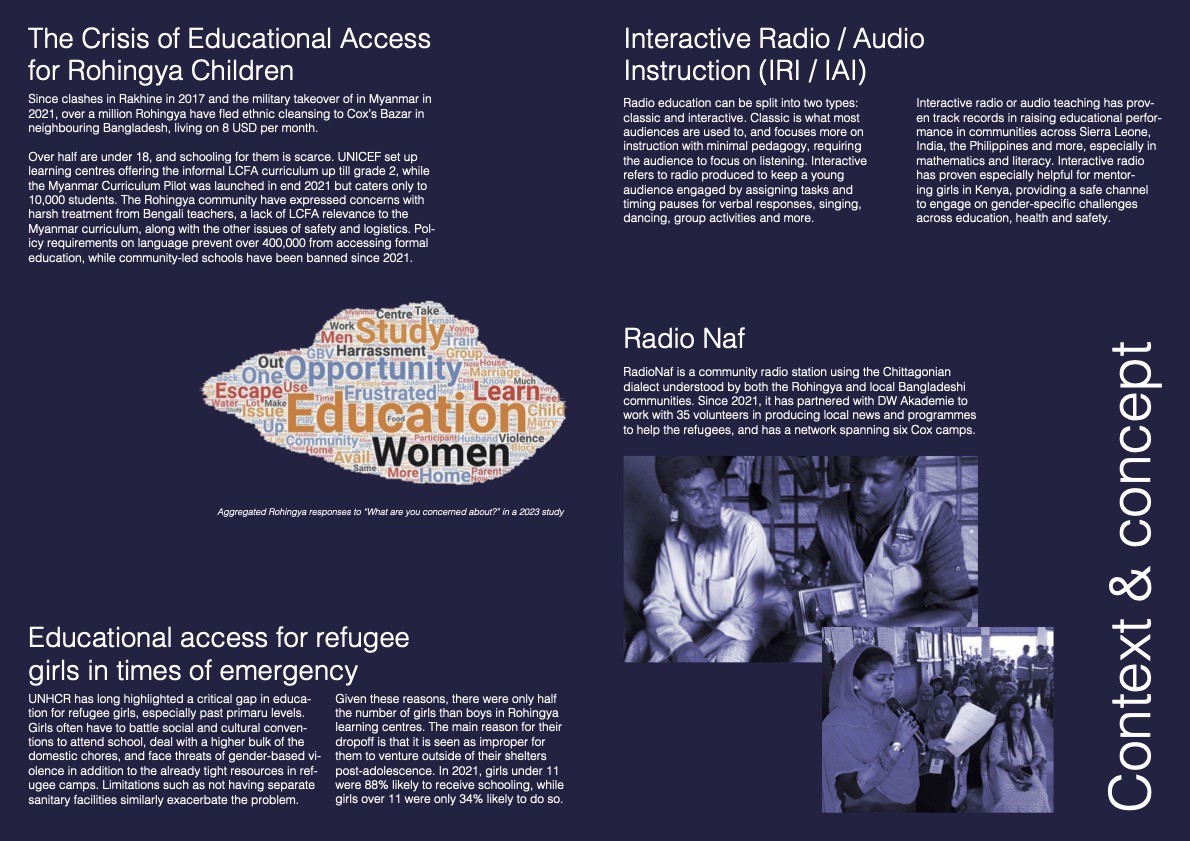
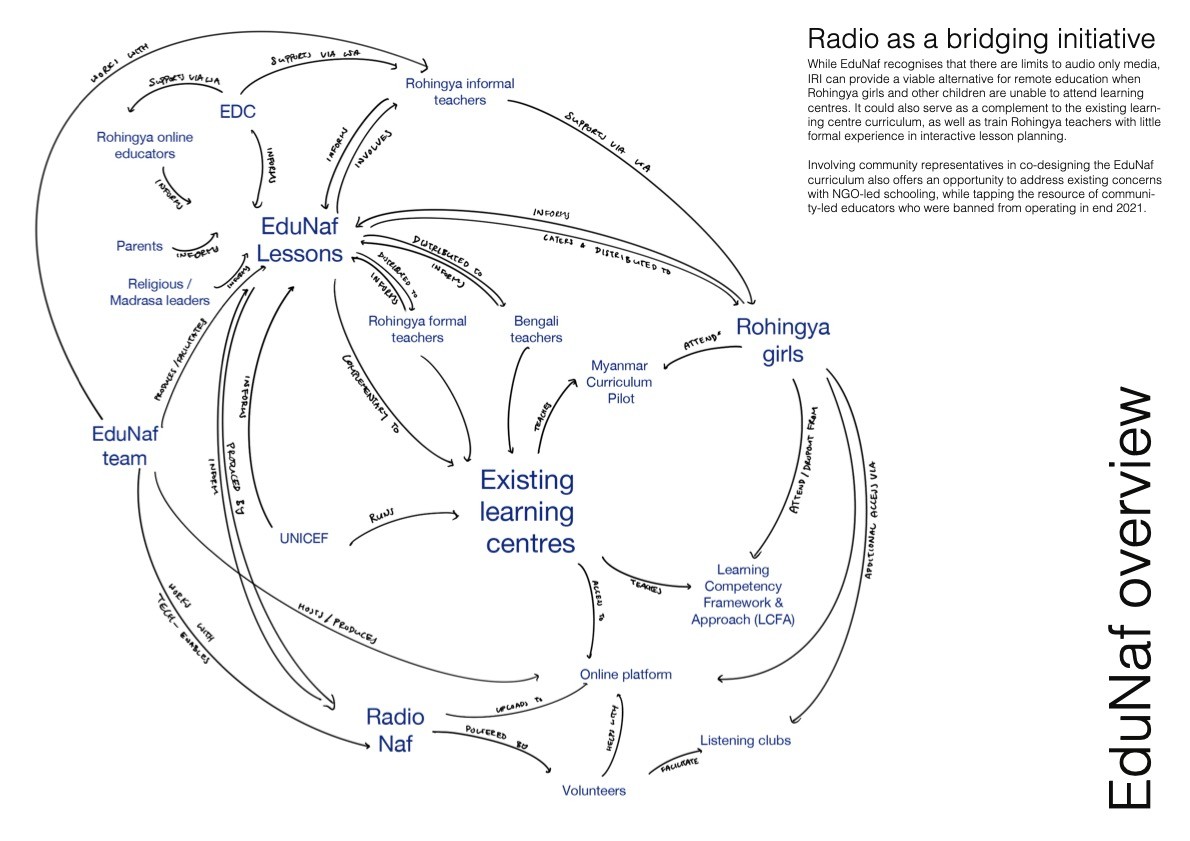
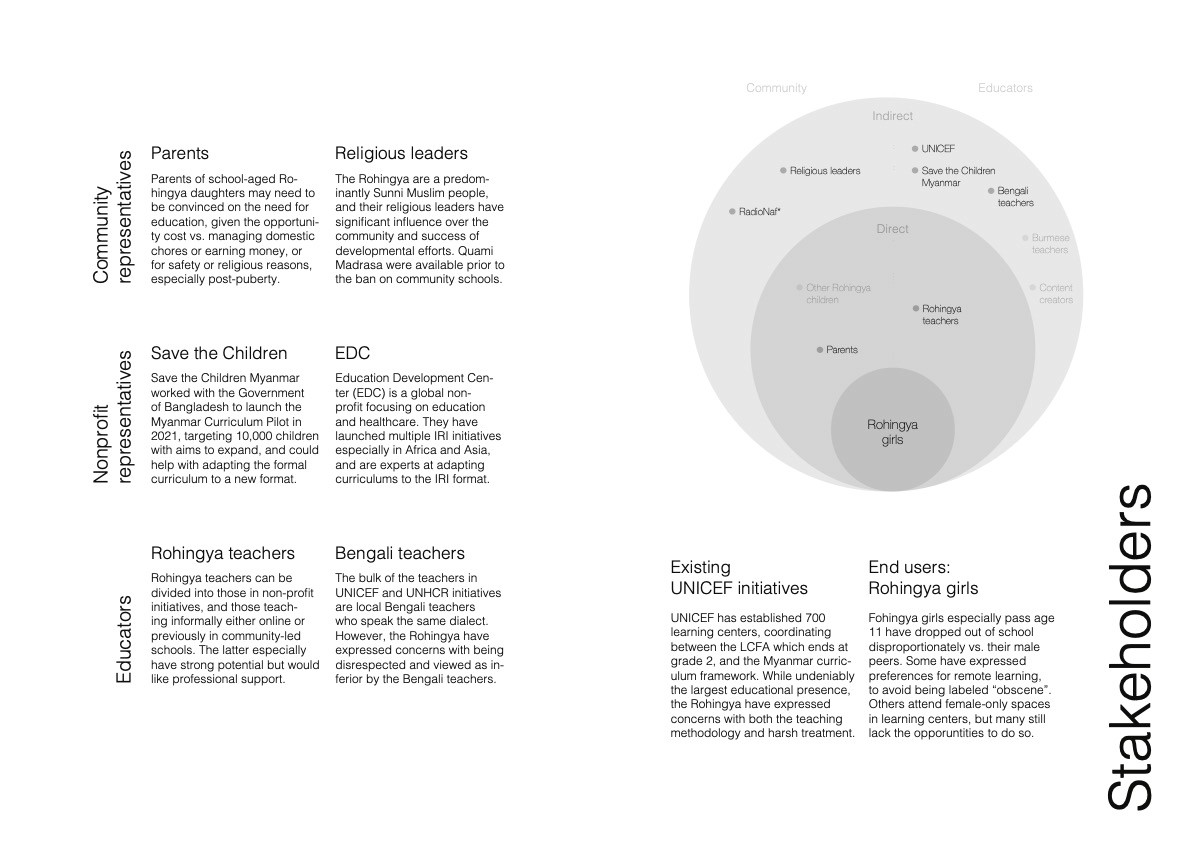
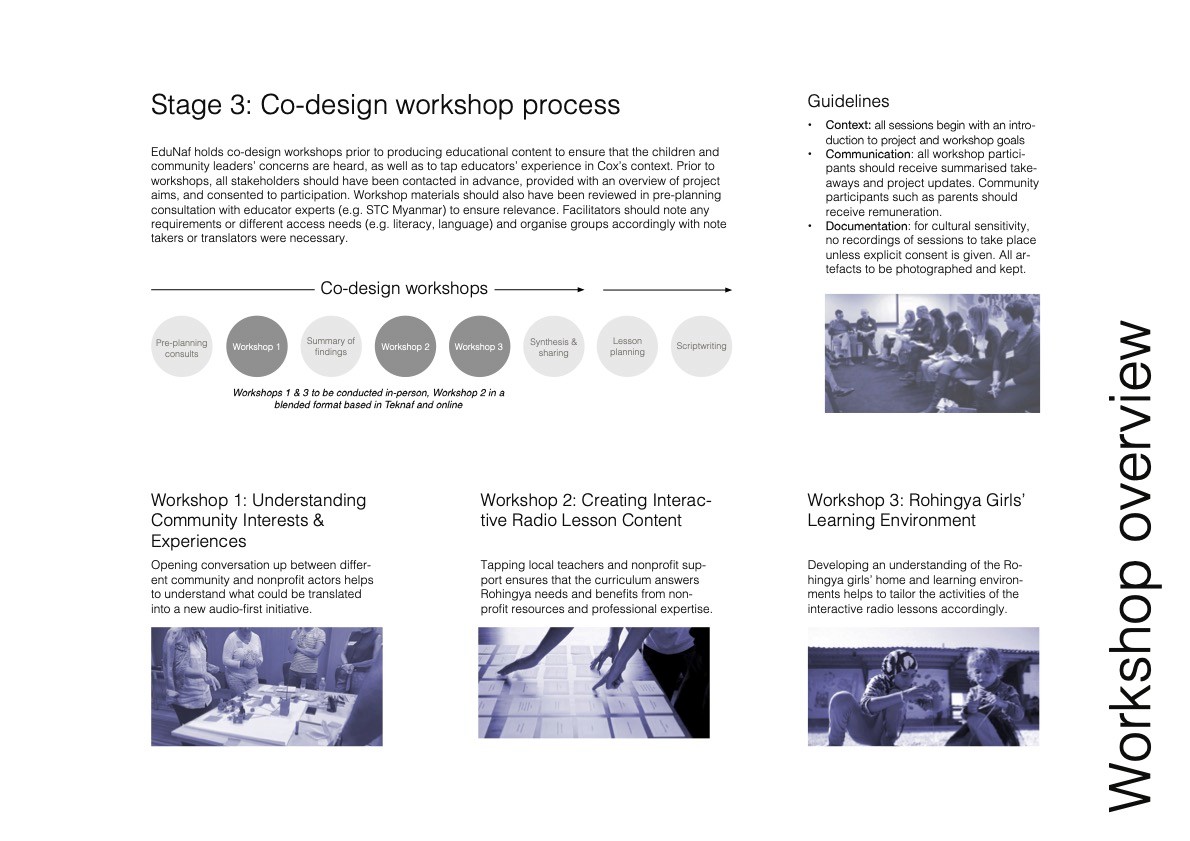
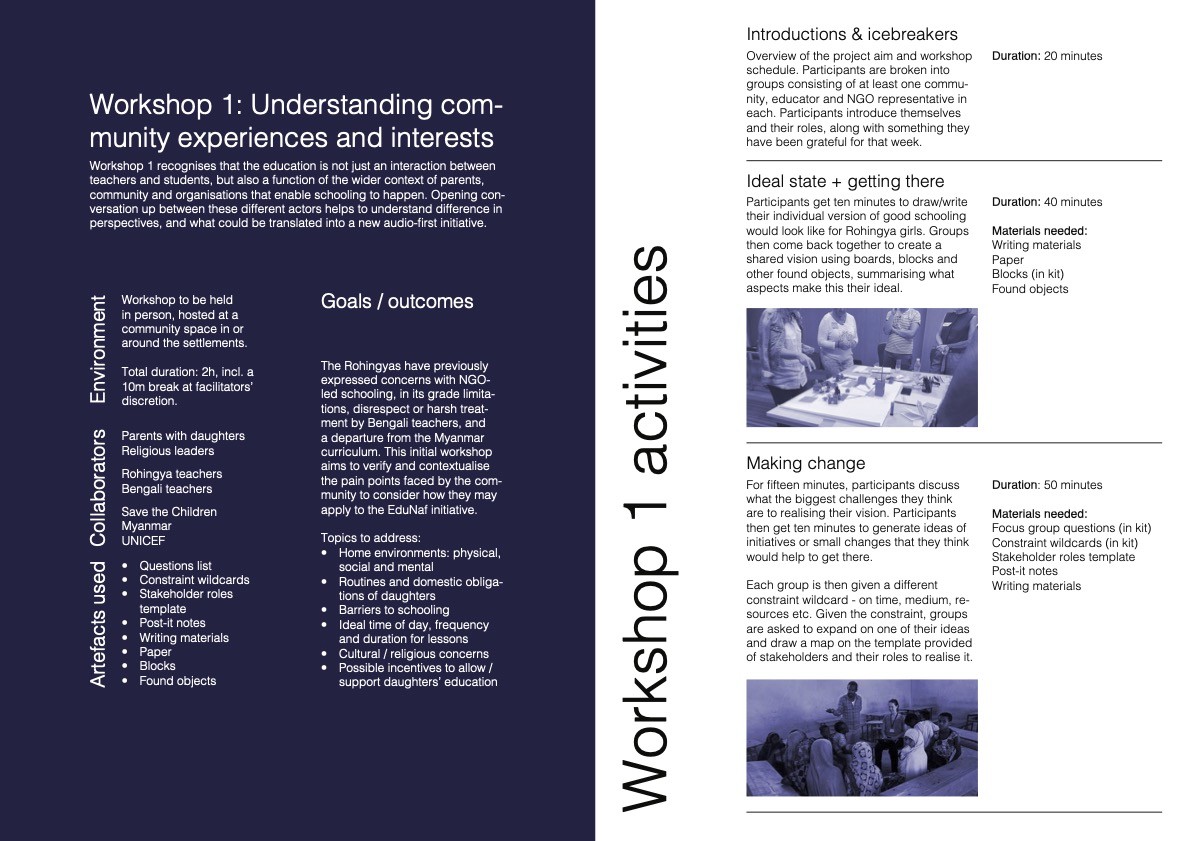
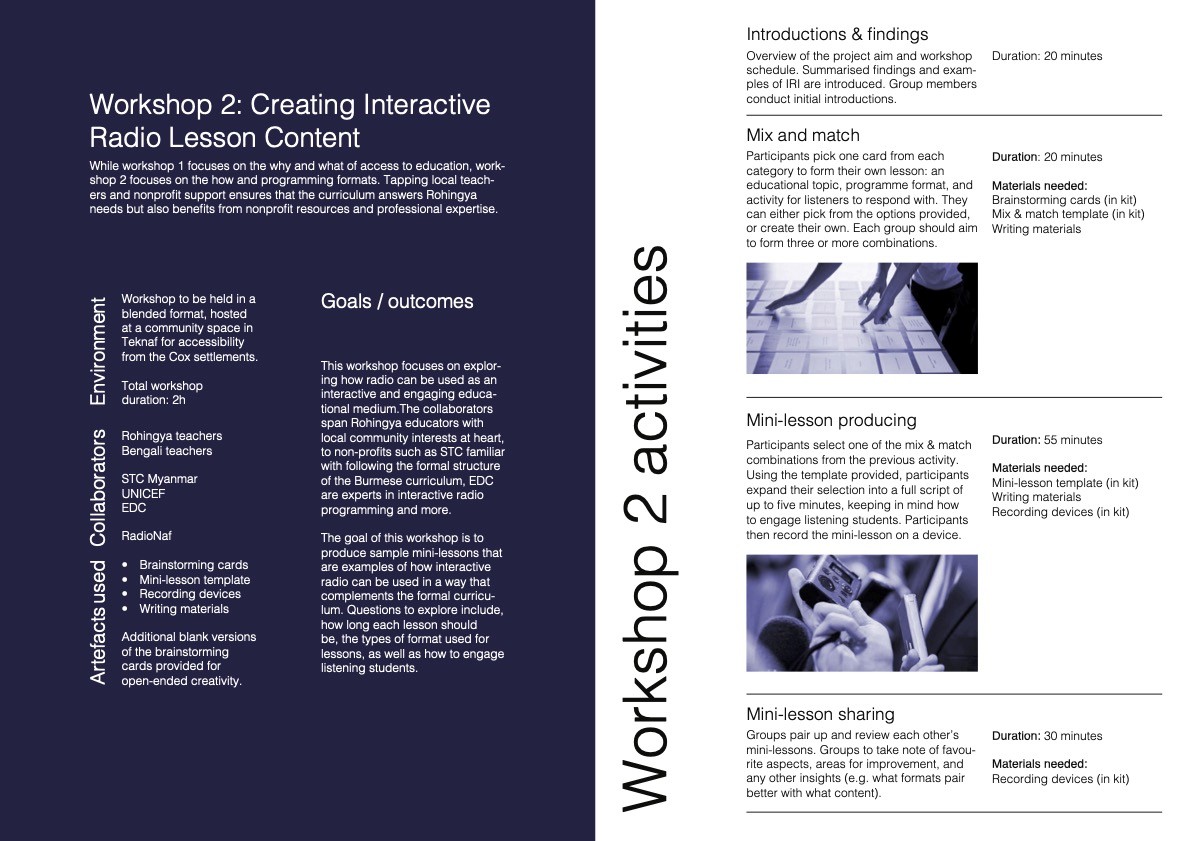
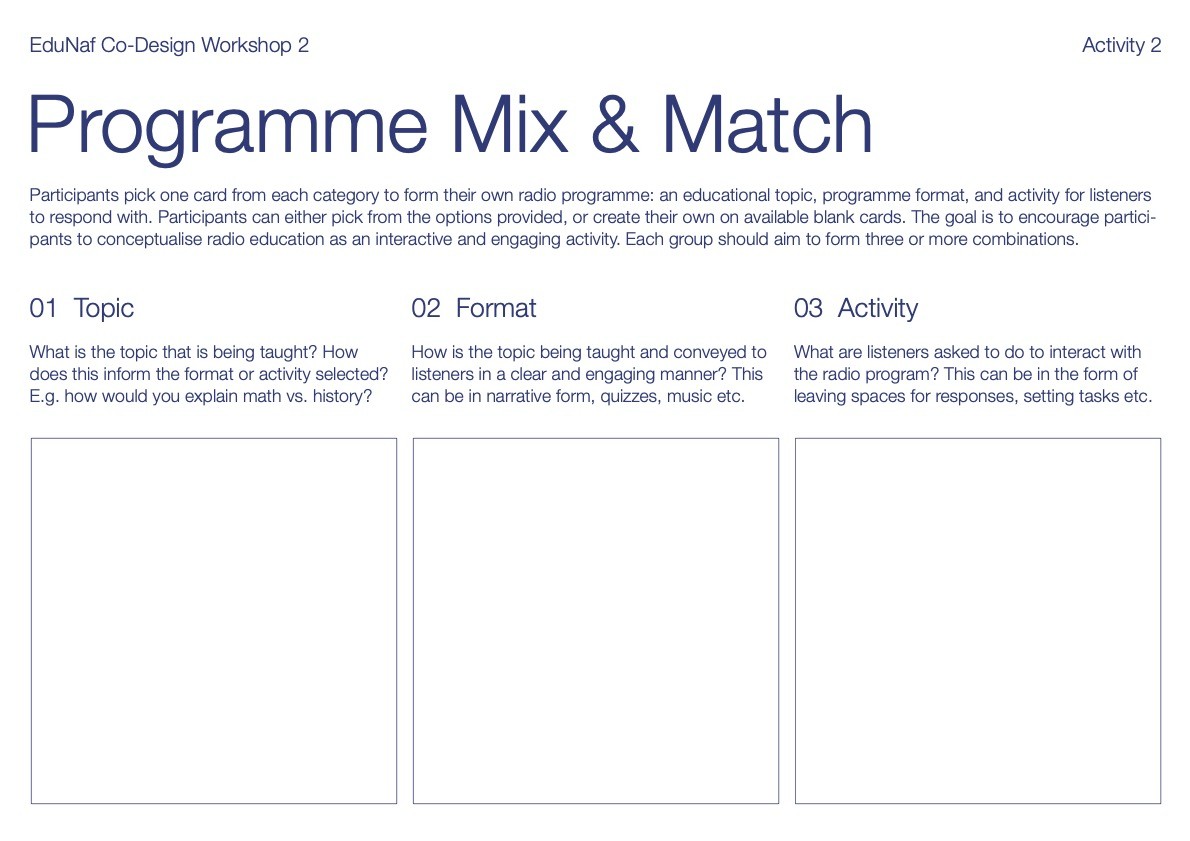
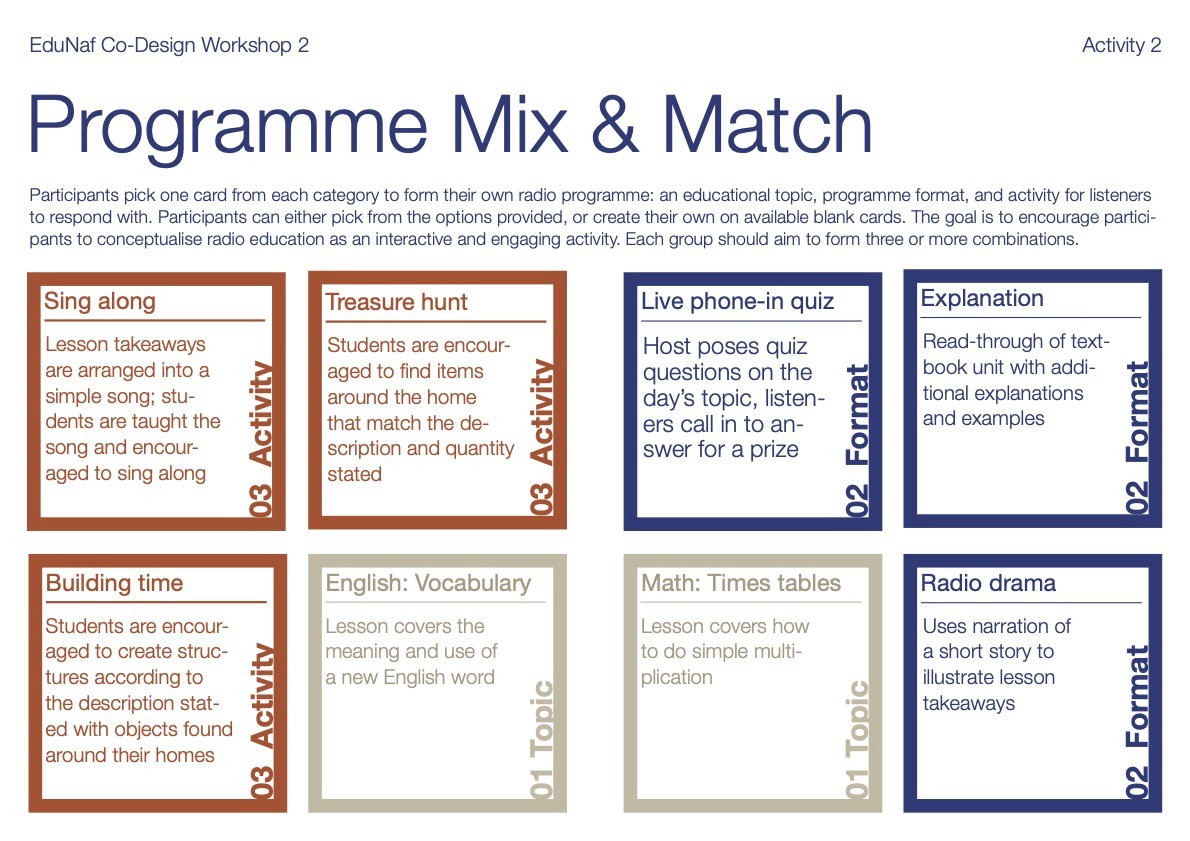
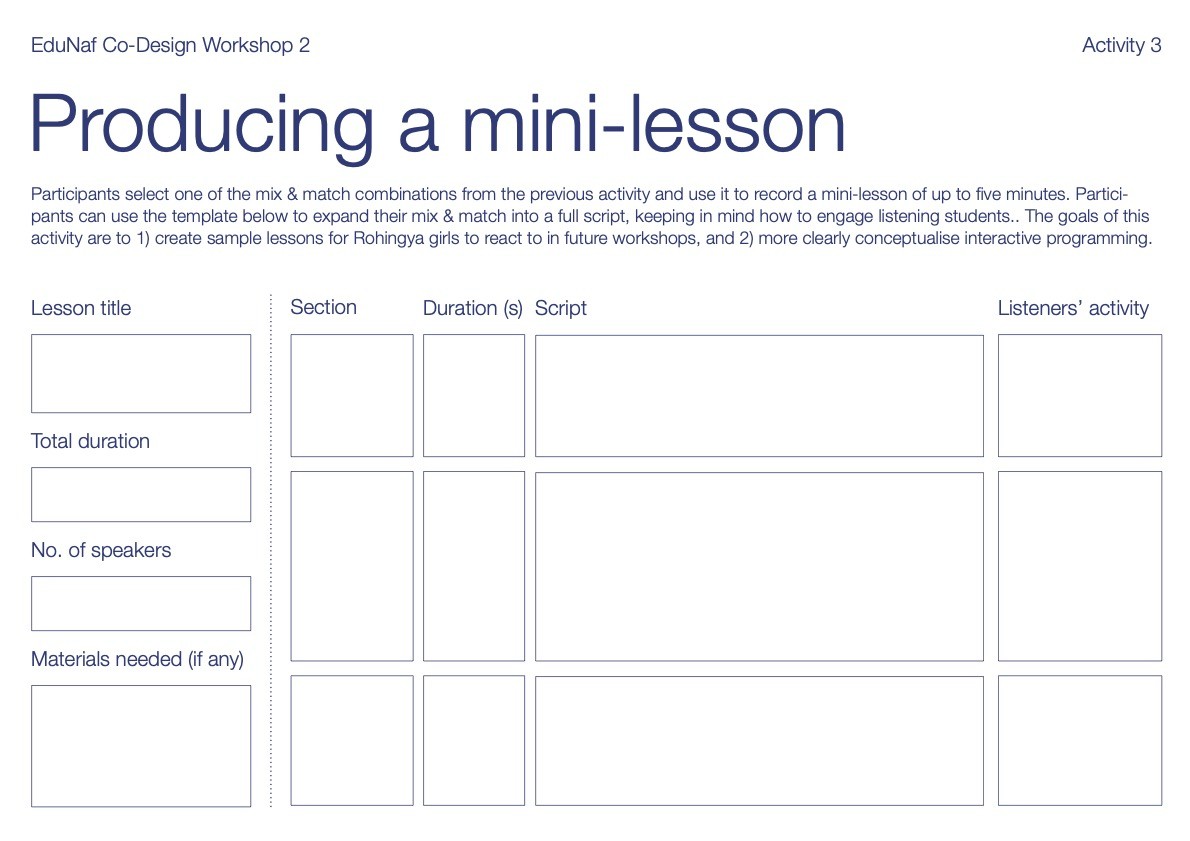
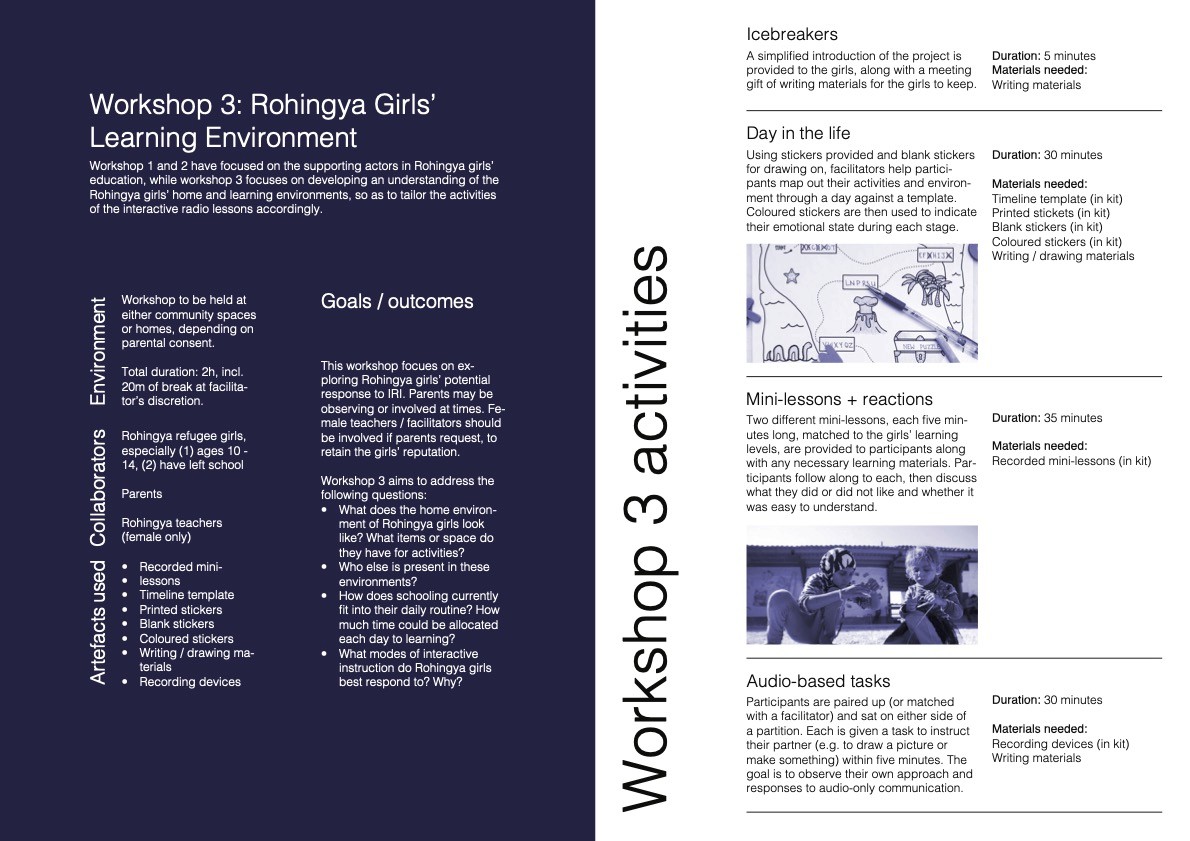
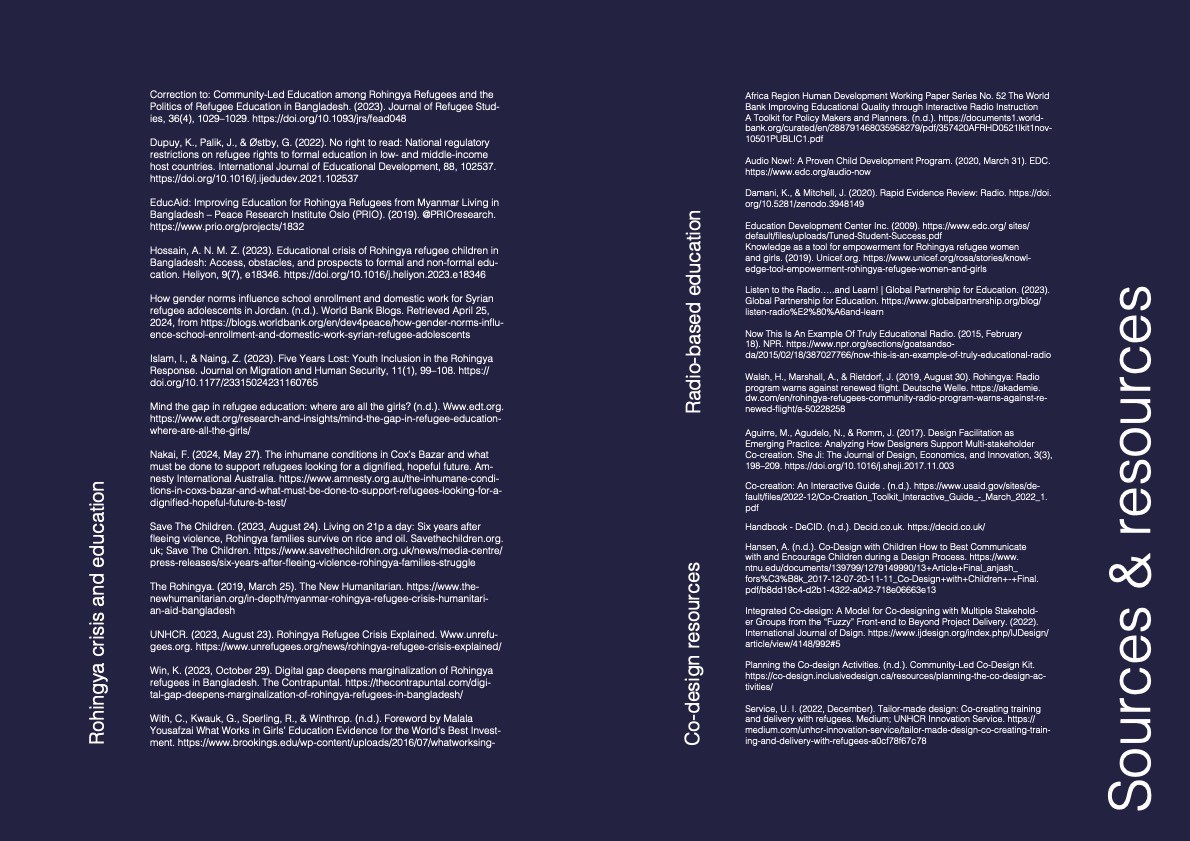
The Rohingya community have raised concerns that most non-profit provided schooling does not follow the Myanmar curriculum, is limited in grade level and that they face disrespect from the Bengali teachers. EduNaf brings different stakeholders together in designing this radio-based curriculum to 1) tap Rohingya teachers who are now banned from community-led teaching, 2) ensure keeping up with the Myanmar curriculum, 3) provide support in teaching methodology and 4) create interactive programming
This would follow in a series of three main workshops. Workshop 1 brings together community representatives such as parents and religious leaders to articulate issues surrounding education access for girls Workshop 2 brings together local and nonprofit educators to explore the possibilities of interactive radio instruction in a Rohingya context. Workshop 3 centers on Rohingya girls’ home and educational experience to inform the types of activities and formats that would most engage them.